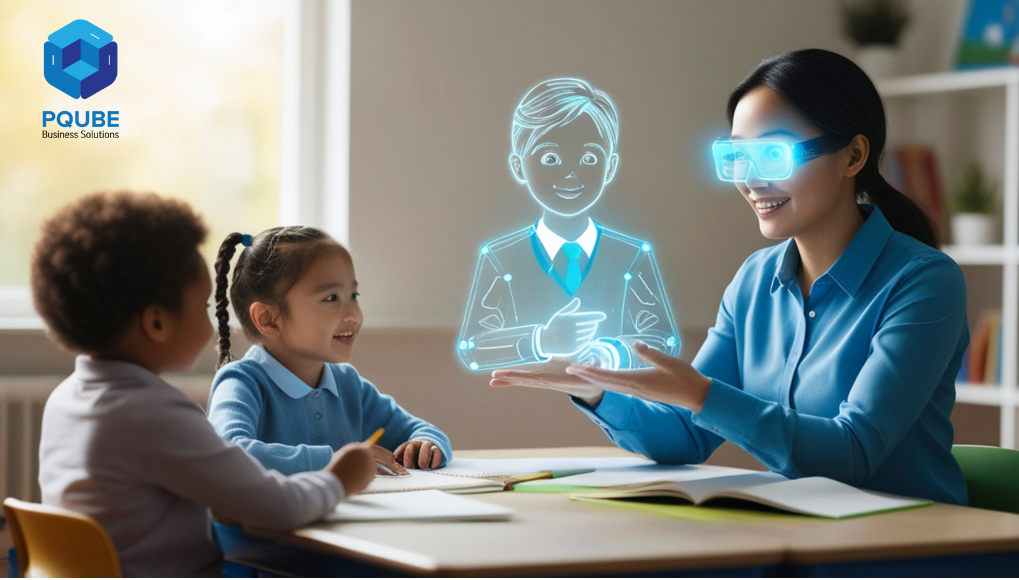
AI in Education: What Schools Are Really Asking For
In my conversations with school founders, principals, and management teams, one question keeps coming up:
“We understand AI is powerful but how does it actually help a school like ours?”
This question usually does not come from skepticism. It comes from responsibility. Schools are cautious because they deal with students, data, teachers, and parents. They are not looking for buzzwords; they are looking for outcomes.
Based on these real discussions, one thing is clear: artificial intelligence in schools works best when it solves everyday problems first.
Why AI in Education Has Become a Practical Necessity
Schools today face mounting pressure in three key areas:
- Administrative complexity
- Expectations for personalized learning
Manual processes, spreadsheets, and fragmented systems are no longer sufficient. This is where AI powered education systems begin to add real value not by replacing people, but by supporting them.
Artificial Intelligence in Schools: Where Adoption Usually Begins
1. Smarter School Administration
The first and most successful use of AI in education is administration.
Schools are using AI to:
- Automate admissions workflows
- Respond to parent enquiries intelligently
- Track attendance and compliance
- Generate reports for management and regulators
One school I worked with significantly reduced administrative follow-ups by introducing AI-based workflows that handled reminders, categorization, and escalation automatically.
This is a key benefit of artificial intelligence in schools it reduces friction without disrupting existing processes.
2. AI Tools for Schools That Support Teachers
A common concern I hear is whether AI will replace teachers. In reality, schools are adopting AI tools for schools that do the opposite.
Examples include:
- Automated grading for objective assessments
- AI-assisted lesson planning
- Performance trend analysis across classes
- Early identification of learning gaps
Teachers remain fully in control. AI simply removes repetitive tasks and provides insights that would otherwise take hours.
In practice, this has led to better teacher satisfaction and more focused classroom time.
3. Personalized Learning and Improved Outcomes
This is where the benefits of AI in education become most visible.
AI-enabled platforms help schools:
- Adapt learning paths to individual students
- Recommend remedial or enrichment content
- Track progress continuously
- Improve engagement across learning levels
Instead of teaching to an average, schools can now support every student more effectively—without increasing teacher workload.
AI Powered Education Systems for School Leadership
From a leadership perspective, AI brings clarity.
School management teams gain access to:
- Attendance and academic trends
- Teacher workload visibility
- Resource utilization insights
- Early warning indicators for intervention
Decision-making becomes proactive rather than reactive. This is often the moment when AI shifts from being an IT initiative to a strategic one.
Addressing Common Concerns About AI in Schools
From experience, these are the most frequent concerns:
Data privacy:
AI must operate within secure, compliant platforms with strict access controls.
Teacher adoption:
When AI saves time instead of adding complexity, adoption follows naturally.
Cost:
Many schools already have AI capabilities available through existing platforms. The challenge is not access—it is implementation.
How Schools Should Approach AI Adoption
The schools that see the best results follow a simple approach:
- Start with one administrative process
- Measure impact
- Expand gradually
- Build confidence internally
This phased adoption reduces risk and builds trust across staff and stakeholders.
The Real Benefits of AI in Education
From my experience working with schools, the biggest benefits are not technical.
They are human:
- Teachers get more time to teach
- Students receive better support
- Management gains visibility
- Parents experience better communication
AI succeeds when it quietly improves how people work together.
Final Thoughts
AI in education is no longer about experimentation. It is about enablement.
Schools that adopt artificial intelligence in schools thoughtfully are not just becoming more efficient they are creating better environments for teaching and learning.
And that, ultimately, is what digital transformation in education should be about.