Introduction
As businesses grow, operational complexity grows with them.
What initially starts as a few simple tools quickly becomes a patchwork of spreadsheets, accounting systems, CRM tools, and disconnected databases. Each department builds its own way of working.
- Sales tracks leads in one system.
- Finance operates on another platform.
- Operations manages inventory separately.
- Customer service relies on email and manual logs.
Over time, this fragmentation creates a bigger challenge than most organizations expect: lack of business visibility.
This is where platforms like Microsoft Dynamics 365 begin to make a meaningful impact.
The Real Challenge: Disconnected Business Systems
In many organizations we speak with, the biggest issue is not the absence of technology. It is the lack of integration between systems.
When business data exists in multiple disconnected platforms, several operational issues emerge:
- Sales teams cannot see real-time inventory or order status
- Finance teams struggle with delayed reporting
- Customer service teams lack full customer context
- Leadership lacks reliable business dashboards
As a result, decision making becomes slower and often reactive.
A unified ERP platform addresses this challenge by bringing core business operations onto a single connected system.
What Microsoft Dynamics 365 Brings to the Table
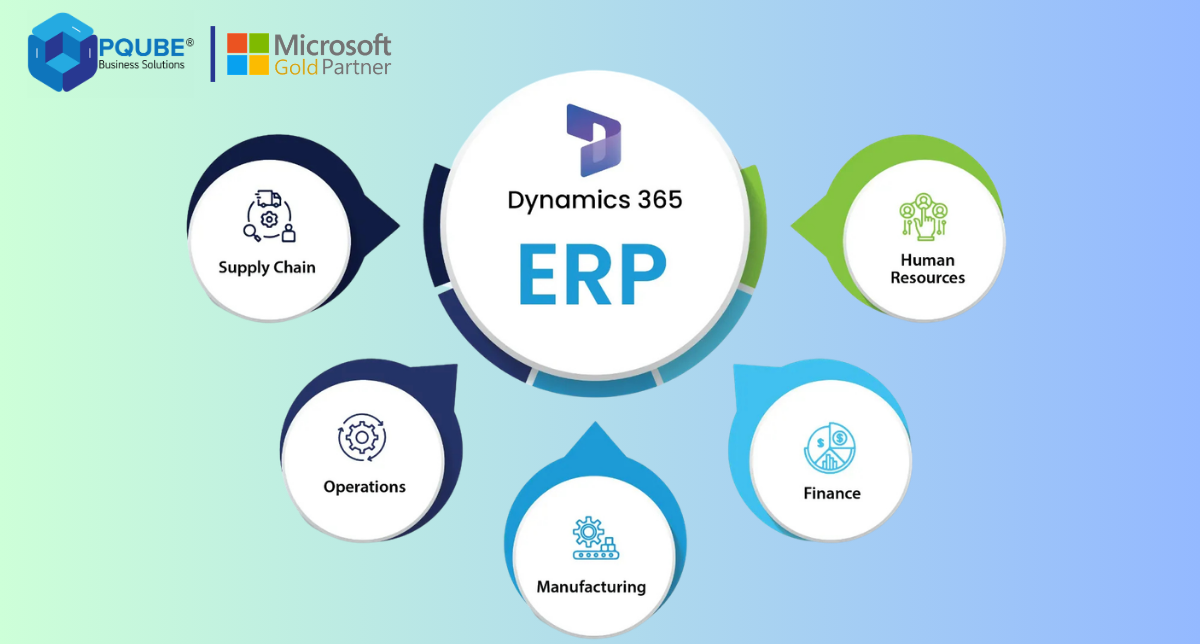
Microsoft Dynamics 365 is designed as a modular enterprise platform that integrates multiple business functions.
Instead of separate tools for different teams, organizations can manage key operations through one connected ecosystem.
This includes:
- Sales and CRM management
- Financial operations
- Supply chain and inventory management
- Customer service and support
- Business analytics and reporting
By centralizing business data, companies gain a single source of truth for operational insights.
Key Benefits Businesses Experience
- Unified Customer Data
One of the biggest advantages of implementing Dynamics 365 is the creation of a 360-degree customer view.
Teams across the organization can access:
- Customer purchase history
- Communication records
- Support interactions
- Payment and invoicing information
This eliminates information silos and significantly improves customer engagement.
- Real-Time Business Intelligence
Many organizations rely on manual reporting and Excel consolidation to understand performance.
Dynamics 365 integrates with analytics tools to provide real-time dashboards and reporting, allowing leadership teams to monitor:
- Sales performance
- Revenue trends
- Operational efficiency
- Customer behavior
Access to real-time data enables faster and more confident decision making.
- Automated Business Workflows
Manual processes often slow down operations and increase the risk of human error.
Dynamics 365 allows businesses to automate critical workflows such as:
- Lead assignment and sales follow-ups
- Invoice creation and approval workflows
- Order processing
- Customer notifications
Automation not only improves efficiency but also ensures consistent processes across departments.
- Seamless Integration with the Microsoft Ecosystem
For organizations already using Microsoft productivity tools, Dynamics 365 integrates naturally with the broader ecosystem including:
- Microsoft 365
- Power BI
- Microsoft Teams
- Power Automate
- Azure Cloud
This creates a unified digital workspace where collaboration, communication, and data sharing happen seamlessly.
Implementation Strategy Is Critical
While enterprise platforms provide powerful capabilities, the real success of any ERP initiative depends on how it is implemented.
A successful implementation requires:
- Clear understanding of business processes
- Proper system configuration
- Alignment with business objectives
- Training and adoption across teams
Technology alone does not create transformation. The value comes from aligning technology with business strategy.
The Impact After Implementation
Organizations that implement Dynamics 365 effectively typically experience measurable improvements within the first few months:
- Faster decision making
- Better cross-team collaboration
- Improved customer experience
- Greater operational transparency
- Reduced manual work
The organization moves from reactive management to data-driven decision making.
Final Thoughts
Digital transformation is often misunderstood as simply adopting new technology.
In reality, it is about creating clarity across the organization’s operations, data, and decision-making processes.
Platforms like Microsoft Dynamics 365 help businesses achieve this by connecting teams, systems, and information into one intelligent platform.
For growing companies navigating increasing complexity, the right ERP system can become the foundation for scalable and efficient operations.